If you make shoes, or you sell shoes for many years, you will slowly understand one thing.
Insoles look small, but they decide many things.
Comfort, smell, customer feedback, even repeat orders.
Many problems people complain about shoes, actually come from the insole, not the outsole.
In today market, buyers usually look at two main options.
One is natural sheepskin insoles.
Another is synthetic memory foam insoles.
Both are popular. Both have their own fans.
Some customers want very soft feeling when they step in first time.
Some customers care more about long time wearing, after 6 hours, 8 hours, even whole day.
which one is better? To be honest, no perfect answer.
It depends on use, price level, and customer expectation.
In this article, As a sheepskin factory in China, I want to explain this in simple way, from material side, not marketing words.
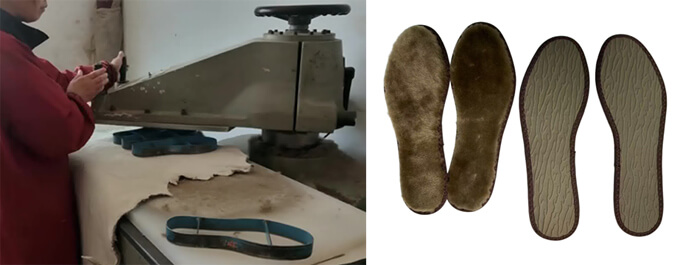
Sheepskin insoles are made from natural wool with real leather backing.
The wool side touches the foot. The leather side stays inside the shoe.
This structure looks simple, but actually it is very old and very smart design.
Wool fiber is elastic by nature. When you step on it, it bends, not collapses.
After you lift your foot, it goes back slowly.
Not like spring, more like breathing.
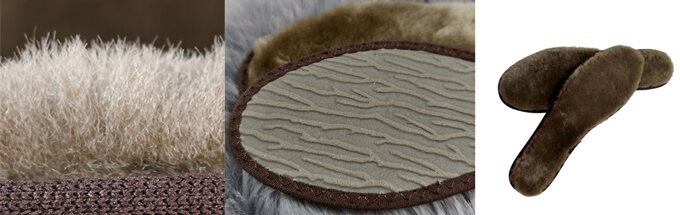
Also wool fiber has space inside. This makes it breathable and warm at same time.
Most sheepskin insoles are used in winter boots, cozy shoes, indoor slippers, outdoor shoes for cold weather.
But now, many brands also use thinner sheepskin for all-season comfort shoes, especially for people who stand long time.
Memory foam insoles are usually made from PU foam.
This is synthetic material. It becomes soft when warm, and hard when cold.
When you step on it, it slowly sinks and shapes to your foot.
This “memory” effect gives very strong first impression.
Many customers like it when they try shoes in store.
They say, wow, very soft. This is why memory foam is very popular in mass market shoes and sport shoes.
But memory foam works mainly by pressure molding.
After many steps, same pressure, same area, it may not go back fully.
This is important point buyers should understand.
| Item | Sheepskin Insoles | Memory Foam Insoles |
|---|---|---|
| First step feeling | Soft but firm | Very soft |
| Long time comfort | Stable | Can flatten |
| Breathability | Very good | Limited |
| Moisture control | Natural absorb & release | Tends to trap sweat |
| Temperature | Warm winter, cool summer | Depends on body heat |
| Odor control | Natural wool advantage | Needs chemical treatment |
| Durability | Long, if good quality | Medium to short |
| Sustainability | Natural, biodegradable | Synthetic |
| Target price | Mid to high | Low to mid |
This table is simple, but useful for quick decision.
Many people misunderstand comfort. They think softer is better.
To be honest, too soft is not always good.
When you stand or walk long time, you need support, not only softness.
Sheepskin insoles feel soft, but they do not collapse easily.
Wool fibers support each other. Pressure spreads to wider area.
This is why after 8 hours, your feet feel less tired.
Memory foam feels very soft at beginning.
But after some months, some areas become thin.Especially heel and ball area.
Then comfort drops fast. Customers may not complain first month, but later, they will.
Feet sweat. This is normal. Question is, what material can handle this better.
Wool can absorb moisture up to around 30% of its weight, but still feels dry.
Then it releases moisture to air. This helps keep feet dry and reduce smell.
This is natural property, no chemical needed.
Memory foam does not breathe much. Sweat stays inside.
If no special treatment, smell comes faster.
For people with sweaty feet, this is big difference.
Many customers think wool is only for winter. This is half true.
Wool keeps warm, yes. But it also keeps temperature stable.
Wool fiber has hollow structure. In cold weather, it traps warm air.
In warm weather, it releases heat. So feet feel more balanced.
Memory foam reacts to body heat. In summer, it can feel hot and sticky.
In winter, it may feel hard first until it warms up.
From factory view, durability is very important. Returns, complaints, all related.
Good quality sheepskin insoles can last long time. Wool may become flatter, but still works.
If customer brushes or cleans it, it can recover some loft.
Memory foam usually has life cycle. After 6 to 12 months, many types lose rebound.
Once flattened, cannot recover. Then customer must replace.

Now many brands care about sustainability. Customers ask questions.
Sheepskin is natural by-product of meat industry.
It is biodegradable. Wool is skin-friendly, good for sensitive skin. Many people feel less irritation.
Memory foam is synthetic. It comes from petroleum. It is not biodegradable.
Some customers accept this. Some do not. Depends on brand position.
For winter boots and thermal shoes, sheepskin insoles are very strong choice. Warm, dry, comfortable.
For daily commuting shoes, if customer walks and stands long time, sheepskin gives more stable comfort.
For sports shoes, memory foam can be useful, but often combined with other support layers.
For high-end comfort shoes, many brands choose sheepskin to show natural and premium feeling.
Not all sheepskin insoles are same.
Wool grade matters. Density matters. Leather thickness matters.
As a sheepskin manufacturer in China, we see many problems from bad raw material.
Loose wool, thin skin, uneven cutting. These cause shedding and short life.
A professional sheepskin factory in China controls tanning, neutralization, cutting.
We can customize thickness, shape, size, OEM and private label.
This helps brands match their shoe design better.
Memory foam insoles give fast comfort. Sheepskin insoles give lasting comfort. This is main difference.
If brand wants low cost and quick selling, memory foam is easy.
If brand wants long-term comfort, natural feeling, and better customer experience, sheepskin is strong option.
If you want to learn more about sheepskin insoles, material details, or OEM solutions, you are welcome to contact us.
We are happy to explain clearly, not only sell. You can reach us here: Contact.


