Sheepskin insoles are made from natural wool on top and real leather base underneath.
This is important point. It is not glued wool fabric, and not foam with wool surface. It is one complete sheepskin.
Compared with synthetic, foam, or microfiber insoles, the biggest difference is material structure.
Synthetic insoles rely on chemical foam for softness.
Sheepskin uses natural wool fiber structure, which already has air space, spring shape, and moisture control ability.
Wool fiber is not straight like plastic fiber. It has natural curl (crimp).
This curl helps air circulation, shock absorption, and recovery after pressure.
This is why good sheepskin shoe inserts feel soft but not dead sof like cheap foam.
Many customers think sheepskin insoles only for winter. This is half correct.
Wool keeps warm in winter, yes, because it traps air. But in summer, it also releases heat.
Wool fiber is hollow and breathable. Air can move inside. So foot not easy to overheat.
This is why real sheepskin insoles benefits are warm but not stuffy.
Wool can absorb moisture up to around 30% of its own weight and still feel dry.
This is very important for feet.
Many foot problems come from sweat: smell, bacteria, blister.
Natural wool insoles pull moisture away from skin, then release it slowly to air.
Synthetic foam usually trap moisture inside.
From user feedback, foot feels dryer, and shoe smell reduces clearly after using sheepskin.
Real sheepskin contains lanolin. It is natural fat inside wool.
Many customers with sensitive skin tell us wool feels more friendly than synthetic.
No sharp fiber, no plastic friction.
Also, good sheepskin insoles use REACH compliant tanning, no AZO dye, no strong chemical smell.
This matches EU and US market preference.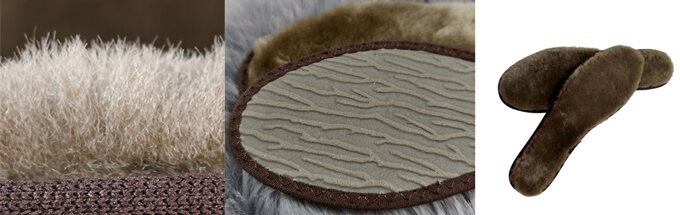
Wool is naturally antibacterial. It does not like bacteria environment.
When moisture controlled, bacteria growth is low, so odor also lower.
This is why many customers say sheepskin insoles keep shoe inside “fresh longer”, especially in winter boots.
| Feature | Sheepskin (Natural Wool) | Synthetic (Foam/Fleece) |
| Comfort & Softness | softer in natural way, springy cushioning. | Good at first, depends on foam quality |
| Breathability | Excellent. Hollow fiber allows air circulation. | Low. Traps heat and moisture |
| Moisture Management | High. Absorbs sweat and keeps foot dry. | Very Low. Sweaty, leads to odor. |
| Durability (Function) | Good. Maintains springiness (crimp recovery). | Good synthetic can last long. |
| Sustainability | Renewable, Biodegradable. | Petroleum-based plastic/foam. |
| Market Positioning | High-end, Comfort, Natural/Eco | Budget, Mass Market |
- Winter Boots: Provides superior insulation and warmth for extreme cold.
- Outdoor/Hiking Shoes: Manages sweat and moisture effectively on long treks.
- Work Shoes: Provides excellent cushioning and fatigue relief for workers who stand all day.
- Casual & Slippers: Adds a touch of luxury and comfort to everyday footwear.
Many brands use sheepskin insoles for boots as upgrade feature, not only accessory.
We control the wool density and cut the length perfectly (e.g., 15mm or 20mm) using the wet shearing machines we invested in back in 2012-2013.
Too short ,not warm. Too loose, collapse fast. Too thin, easy tear. Too thick, shoe feels tight.
Consistent length equals consistent feel.
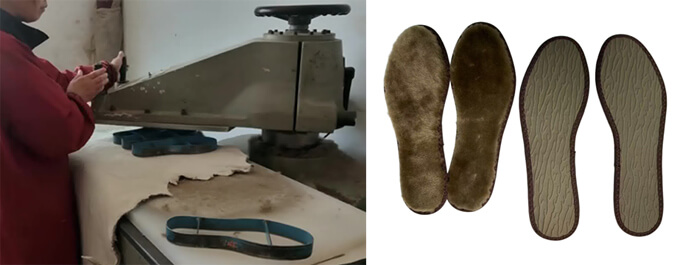
- Raw Material Control: We import our own raw skins from Australia/New Zealand.
This means we control the material quality and cost directly.
- Deep Experience: We have been processing this material for 40 years.
We are experts in handling the leather base, which is very important for durability and comfort.
- Cost Advantage: We are a self-operating exporter. No middleman fees.
You get a better factory price and shorter lead times.
- Compliance Guarantee: We have the SGS, Intertek, and BSCI audit reports.
Your import business is safe with us.
We normally offer wool height from 12mm to 22mm, depending on application.
For winter boots, many customers choose thicker and denser wool.
For casual shoes, thinner option is better to keep shoe fit comfortable.
Wool density and length can be adjusted, but we always keep it consistent within one order.
Yes. OEM and ODM are our daily work.
We can customize size, shape, cutting template, backing material, logo printing, and retail packaging.
Many customers send us shoe last or size chart, we cut based on that, not only standard insole shape.
For sampling, we support small quantity or development samples.
MOQ for bulk order depends on size and specification, usually reasonable for brand and distributor level.
We prefer long-term cooperation, so MOQ is flexible at early stage.
This is very common question.
For anti-slip, latex works best without adding too much thickness.
Felt backing is softer but less anti-slip.

For bulk shipping, we use compression-safe packing to protect wool shape.
For retail, we can offer header card, window packaging, or flat box, so customers can touch the wool but it will not get crushed. Packaging is important for first impression.
We use only Australian sheepskin for our insoles.
From our experience, only Australian sheepskin has stable wool density, consistent fiber length, and reliable quality that can meet the requirements of a high-quality insole.


