Some rugs look fancy.
Some rugs
are fancy.
Real sheepskin sits in that second group.
But fake rugs are everywhere, and sometimes even pros get tricked.
You touch it, looks soft. Feels soft. But is it real? Or is it just polyester pretending?
Here’s seven ways that actually work.
Nothing complicated. Just practical checks.
1. Look at the Backing: Leather vs. Fabric
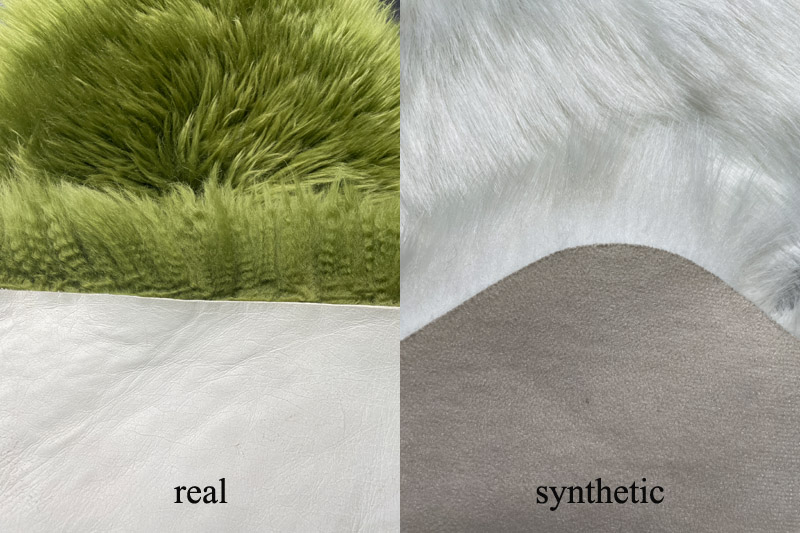
Easiest check. Flip the rug. Look at the back.
Real sheepskin = leather. Natural hide. Usually light beige, off-white, sometimes a little gray or yellow.
Texture is soft but tough. You bend it, feels flexible, not like cardboard.
Fake = fabric. Often woven polyester or fake suede.
It looks too smooth, too perfect. Sometimes the back is even glued mesh.
Pull the wool a little—on the fake one, you’ll see the fabric threads.
On real sheepskin, wool is rooted into leather. Doesn’t pull out easy.
Think of it like jeans vs. paper napkin. One lasts, the other tears.
2. Touch Test: Wool Texture and Feel
Touch doesn’t lie. Real sheepskin wool feels soft, yes, but also springy.
The fibers have natural crimp, like small waves. When you press, it bounces back.
That rebound is key.
Fake wool often feels softer at first touch. Smooth, silky. Too smooth. Almost slippery.
But then you press… and nothing. No bounce. No spring. Density feels fake—every fiber the same length, same direction.
Real sheep don’t grow perfect haircuts. Rugs that look too “uniform,” probably fake.
And here’s another thing: real wool has bottom fleece. Thicker, short fibers close to the skin.
That’s why it supports your weight. Synthetic usually just has long shiny hairs glued in. No base fleece, no real support.
3. Smell Test: Natural Wool Scent vs. Chemical OdorYeah, smells don’t lie either.
Real sheepskin has lanolin. That natural wool grease smell. It’s not strong, not bad. Just… sheep.
A little earthy, a little creamy. Sometimes with hint of leather.
Fake? Usually chemical. Smells like plastic, or cheap dye, or warehouse.
It’s like the difference between fresh baked bread vs. plastic-wrapped toast.
One is real. One is… just pretending.
4. Wool Density and Pile Structure
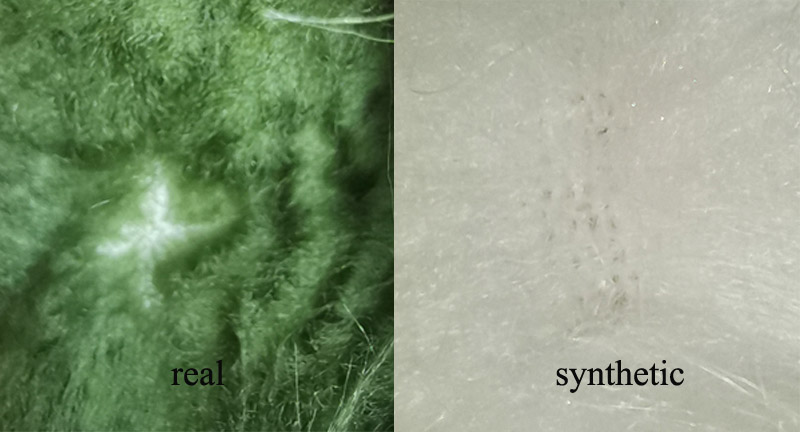
This test is a little more technical, but very effective.
Push the wool aside with your fingers. On real sheepskin, you’ll see wool growing right out of hide.
Fibers anchored deep. At the base, thick underwool. That underwool is like natural padding.
Press your palm down—it pushes back. Real support.
Fake? You push the pile aside, see fabric. Sometimes glue. Definitely no underwool.
Press down and it sinks flat, no resistance.
Another tip: look at wool distribution.
Real sheep don’t grow perfectly even wool. Back and rump area is denser, belly area lighter and softer.
Same hide shows variation.
Fake rugs? Too consistent. All areas look the same. That’s not nature, that’s machine.
Burn Test: Wool vs. Synthetic FiberClassic. Simple. Works every time.
Take a few strands. Light them carefully.
Real wool burns like hair. Because it _is_ hair. Smell = burnt hair. Ash = soft, crumbly powder.
Fake (polyester, acrylic) melts. Smells like plastic. Leaves hard bead, like melted glue.
Important: don’t torch the rug. Just one or two fibers is enough.
Burn test is not for showrooms though. More like factory-level check.
But if you’re serious about sourcing, this one never lies.
6. Temperature and Moisture Regulation
Touch test again, but longer.
Real sheepskin regulates temperature. Warm in winter, cool in summer.
You sit on it, you don’t feel “cold shock.” Even when damp, it keeps some warmth.
Wool fibers have air pockets that trap heat but also breathe.
Synthetic rugs? They copy the look but not the science.
They feel cold in cold rooms. Hot and sticky in summer.
When wet, they stay cold. No breathability.
That’s why people say real sheepskin “adapts.” It’s not magic. It’s physics.
7. Certification and Label Verification
Not everything can be checked with eyes or nose.
That’s why certifications exist.
Look for OEKO-TEX Standard 100. Leather Standard. Or other textile safety marks.
These prove the rug is tested for harmful substances.
Safer for customers, easier for import compliance.
Labels also tell you origin. A good supplier won’t hide that.
If label says “100% sheepskin” but feels like plastic, that’s a red flag.
In B2B sourcing, always confirm certifications. Not just trust words.
Bonus Section: Common Myths About Fake vs. Real Sheepskin
Myth 1: Very white color = fake.Not always. Some hides are bleached. Still real.
Myth 2: Shedding wool = fake.Real sheepskin sheds too. Natural fibers loosen, especially at first. Excessive shedding, though, is usually fake or poor tanning.
Myth 3: Cheap price = always fake. Not true. Some factories use off-cuts, patchwork hides, smaller sizes. Cheaper, but still real.
Bottom line: price is one clue, not the only clue.
Conclusion
So here’s the deal. No single test is 100% foolproof.
Best way? Combine checks.
Look at the back. Touch it. Smell it. Push fibers apart. Burn test if you can. Then check labels.
Together, these steps make it almost impossible to be fooled.
For importers and retailers, this matters.
Customers trust you to deliver what’s written:
genuine sheepskin rug.
Missteps = returns, bad reviews, maybe worse.
So, use these checks. And more importantly—work with suppliers who are transparent.
Who show their process. Who guarantee authenticity. Saves you stress later.
In sheepskin, like in business, truth lasts. Fake doesn’t.
FAQ
1. Is real sheepskin rug always heavy?Yes. Real sheepskin is heavier than polyester rugs.
Leather and dense wool add weight.
2. Can synthetic rugs also be warm?Yes, sometimes. But they don’t breathe.
Real wool regulates heat and moisture naturally.
3. Are all sheepskin rugs machine washable?No. Only specially tanned rugs marked “machine washable.”
Standard ones need gentle care.
4. Is certification mandatory for importing sheepskin rugs?Not always. But having OEKO-TEX or similar certifications reduces compliance risk, especially for EU and US markets.


